What comes built in
More than 130 services are in the catalog on day one: asphalt (mill and overlay at 1", 1.5", 2", 2.5" and 3", full-depth, patching, and more), asphalt repair, concrete (flatwork, curb and gutter, sidewalks, pads), striping, sealcoating, drainage, maintenance, snow and ice, and site services like traffic control and equipment transport and setup. Each one knows what it's measured in, so a mill and overlay asks for square feet and a depth and comes back with tons; a curb line asks for linear feet; stalls ask for a count.
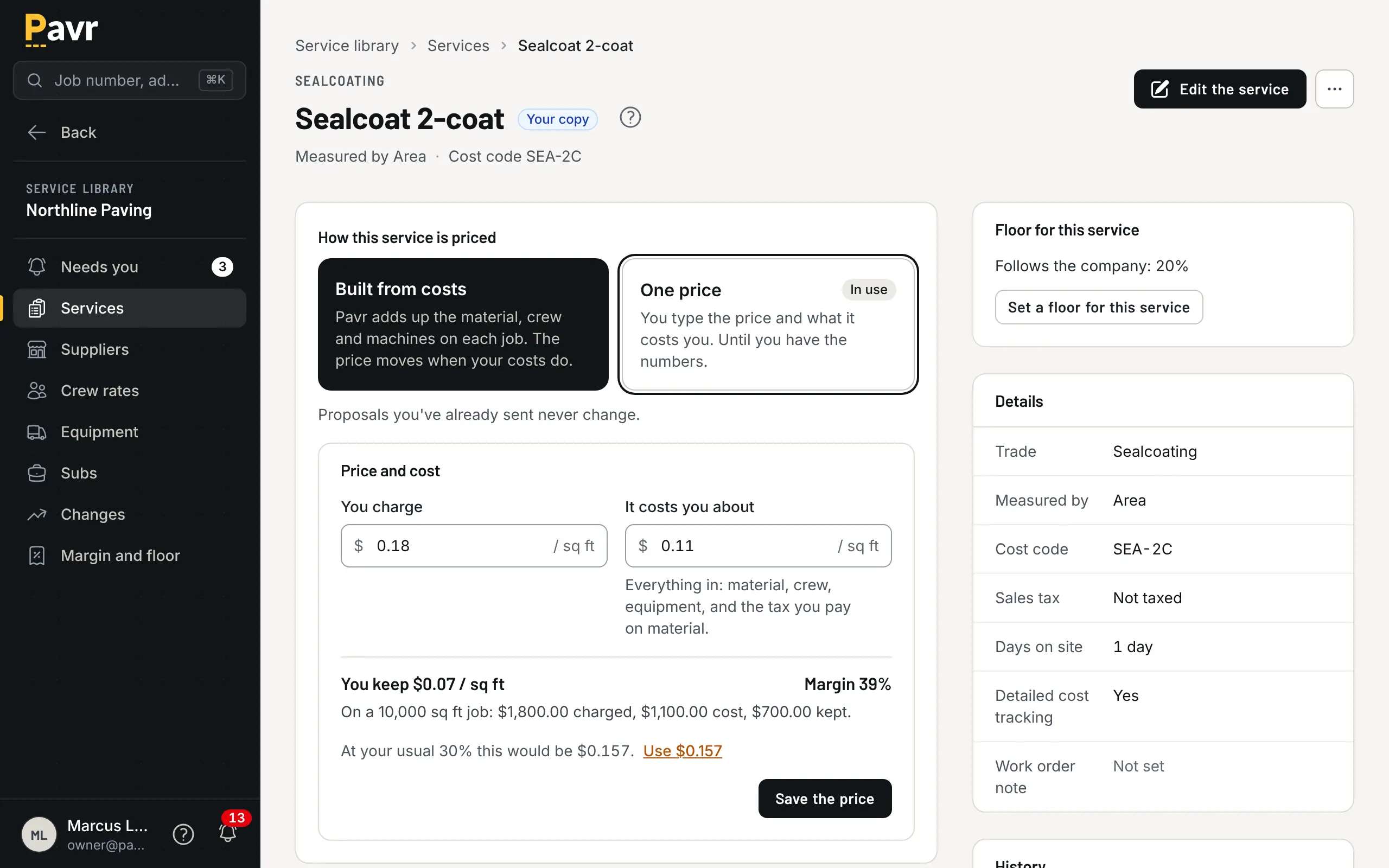
Add your own services next to them, or change what's there. The catalog is yours.
Where the prices come from
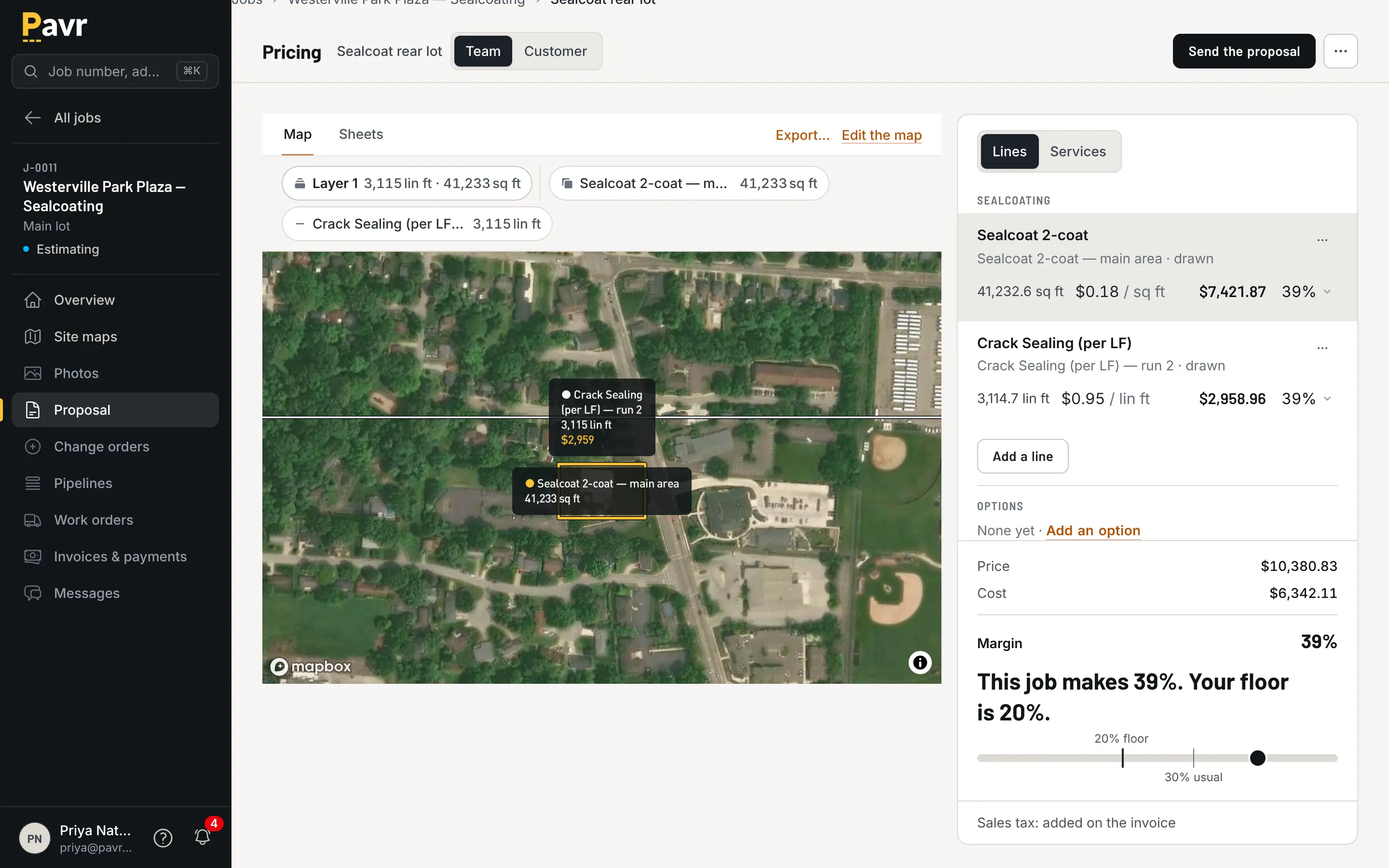
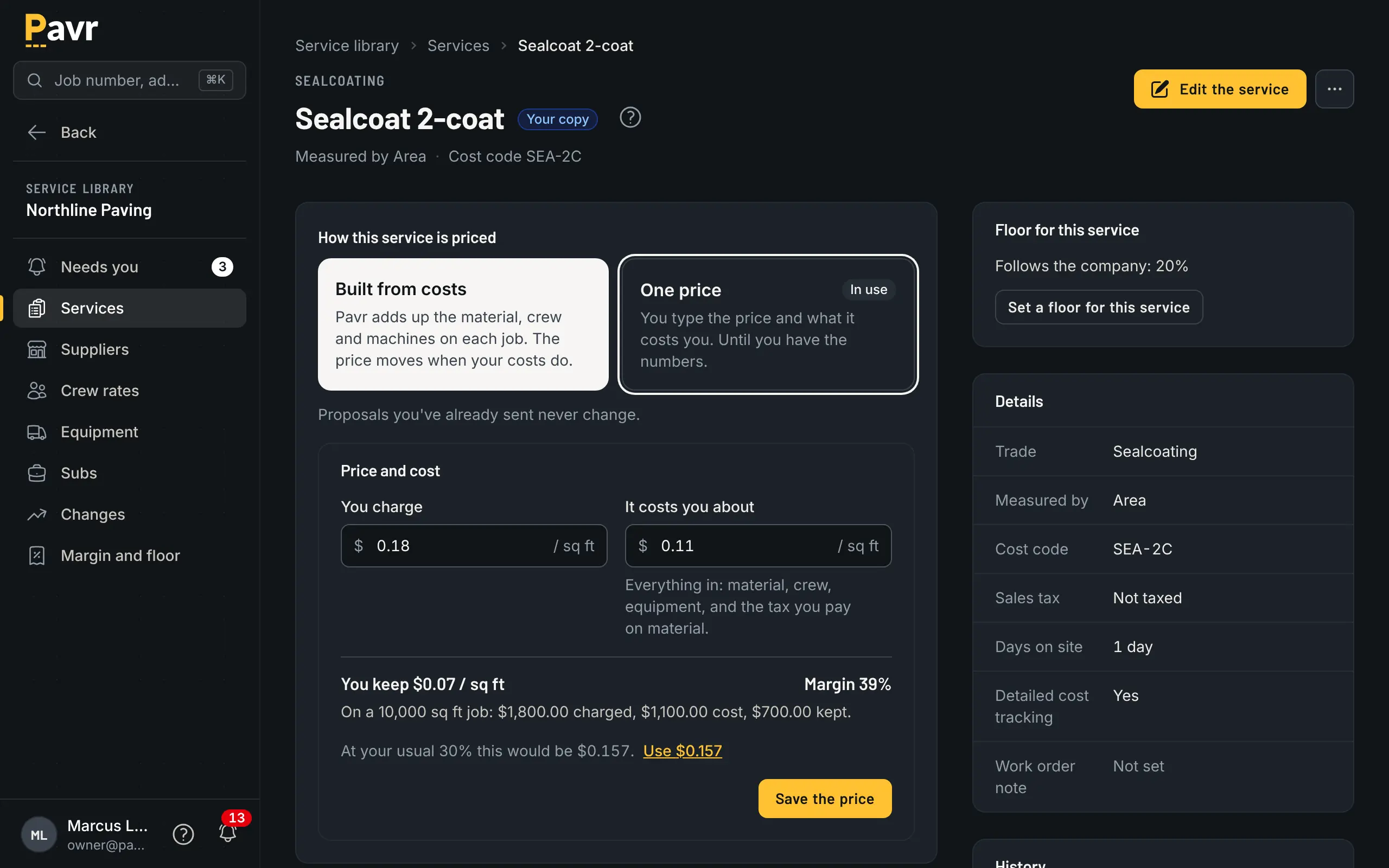
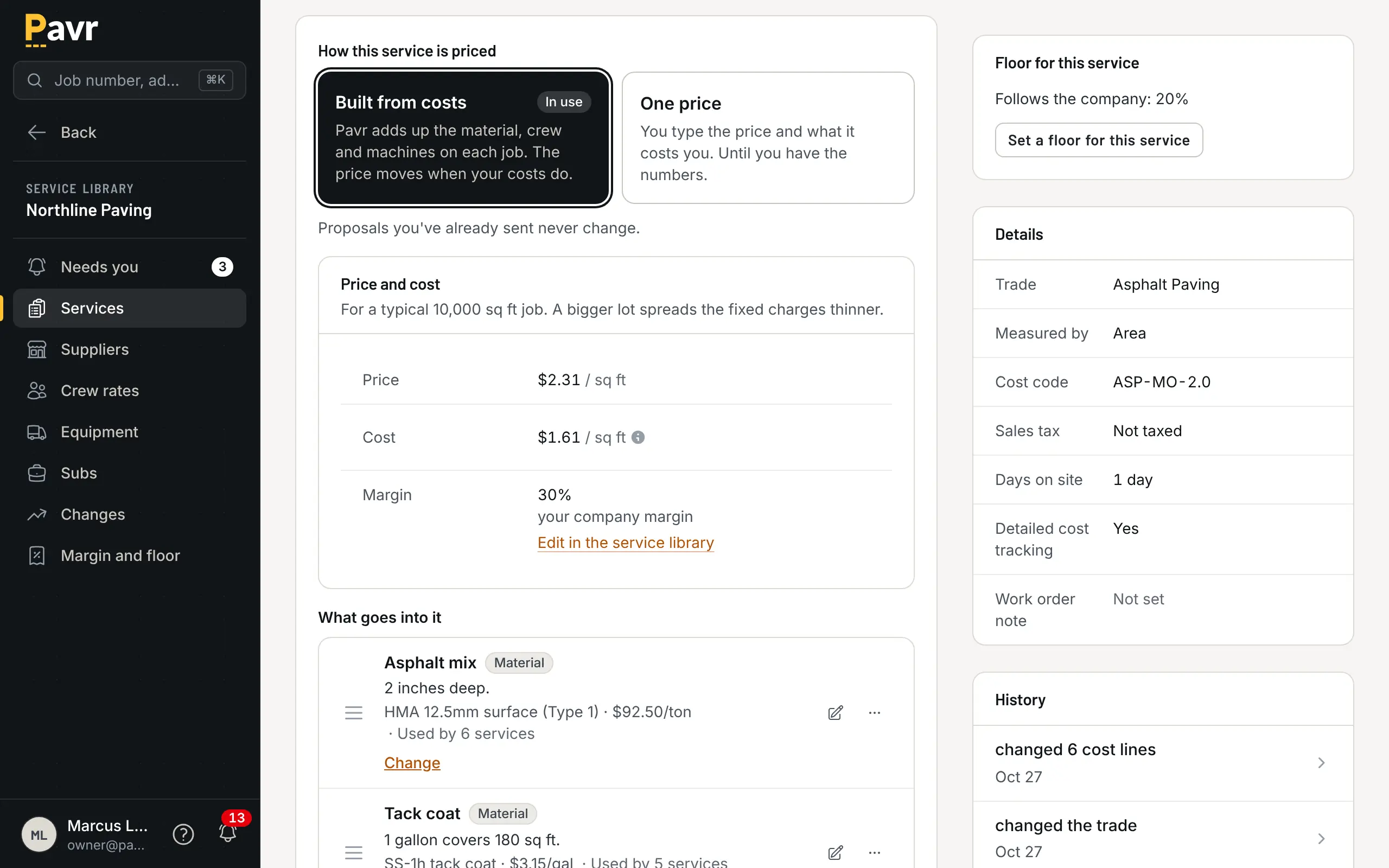
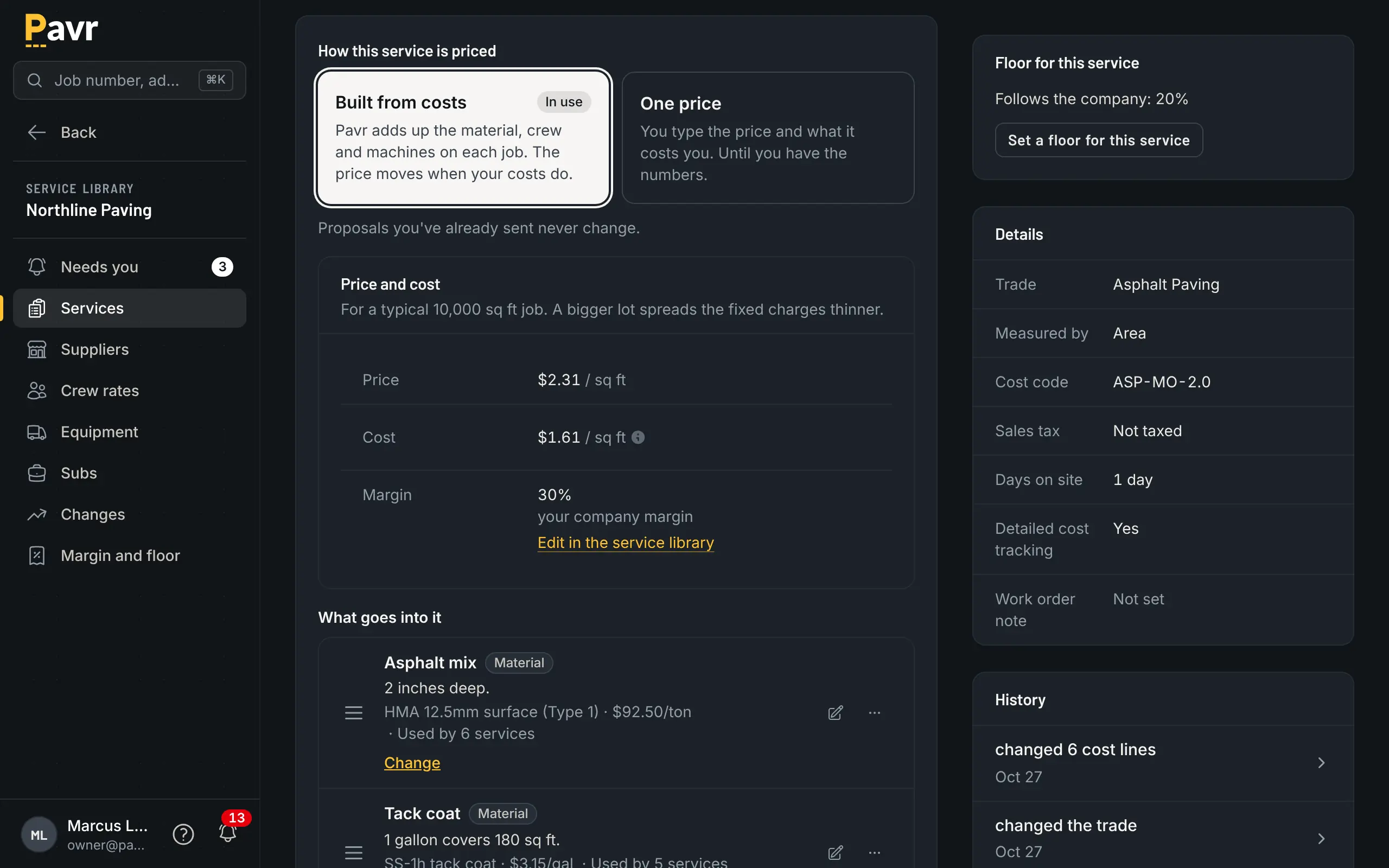
Every line prices from your numbers: the plant's price per ton, your crew rates, your equipment, the sub's quote. Type them once. A price and a cost per unit is enough, or build it up from your plant price and crew rates when you want the detail. Send when it clears the margin floor you set for the company; if it doesn't, it goes to whoever approves it.
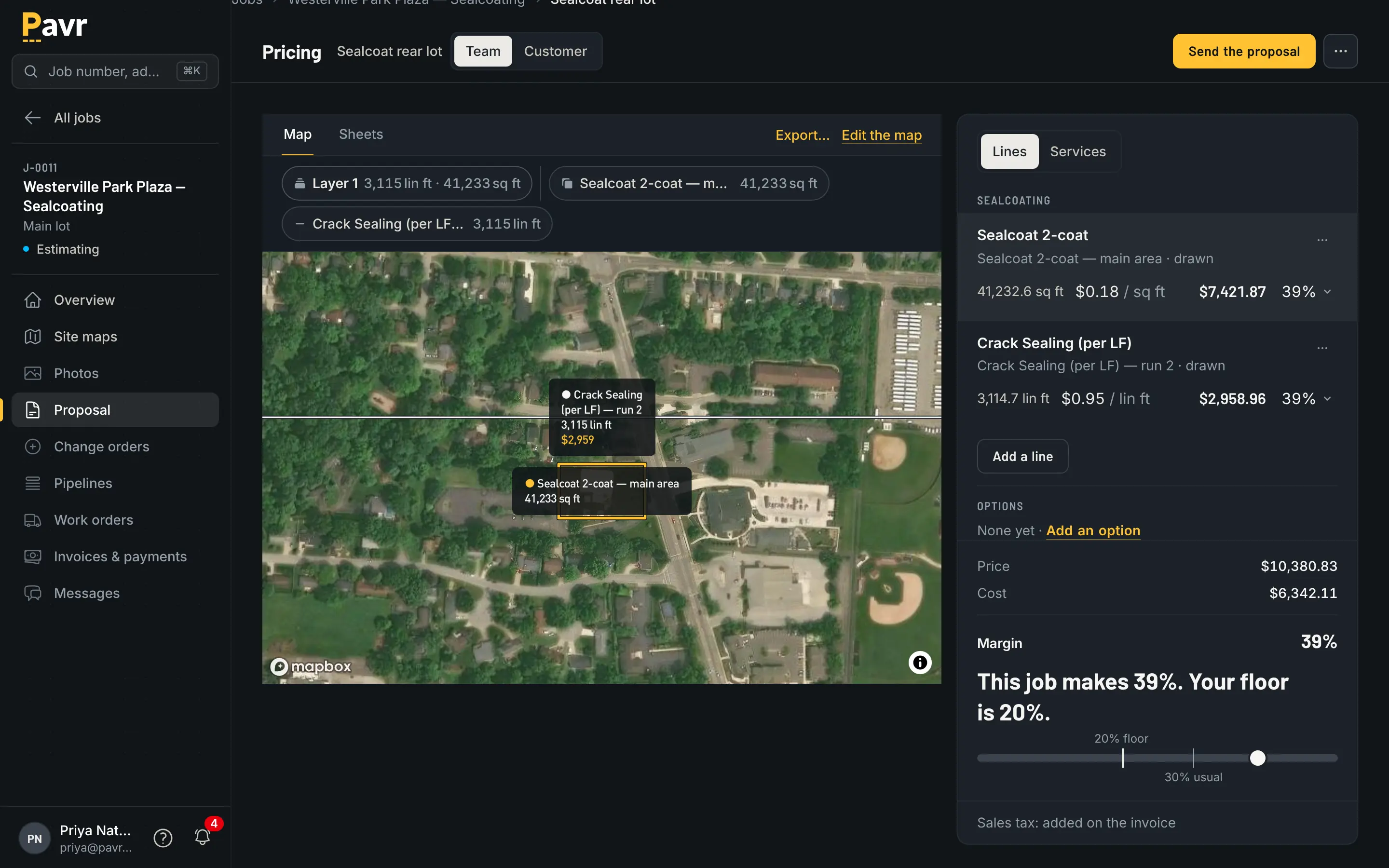
The price and the margin sit beside the lines while you work, on the screen, not in a spreadsheet next to it.
What happens when the plant raises its price
Nothing, to the proposals you've already sent. A sent proposal keeps the prices it went out with; the customer signs exactly what they saw. A draft picks up the new price when you hit refresh, and not before. That's the difference between an estimate and a promise.
What the customer gets
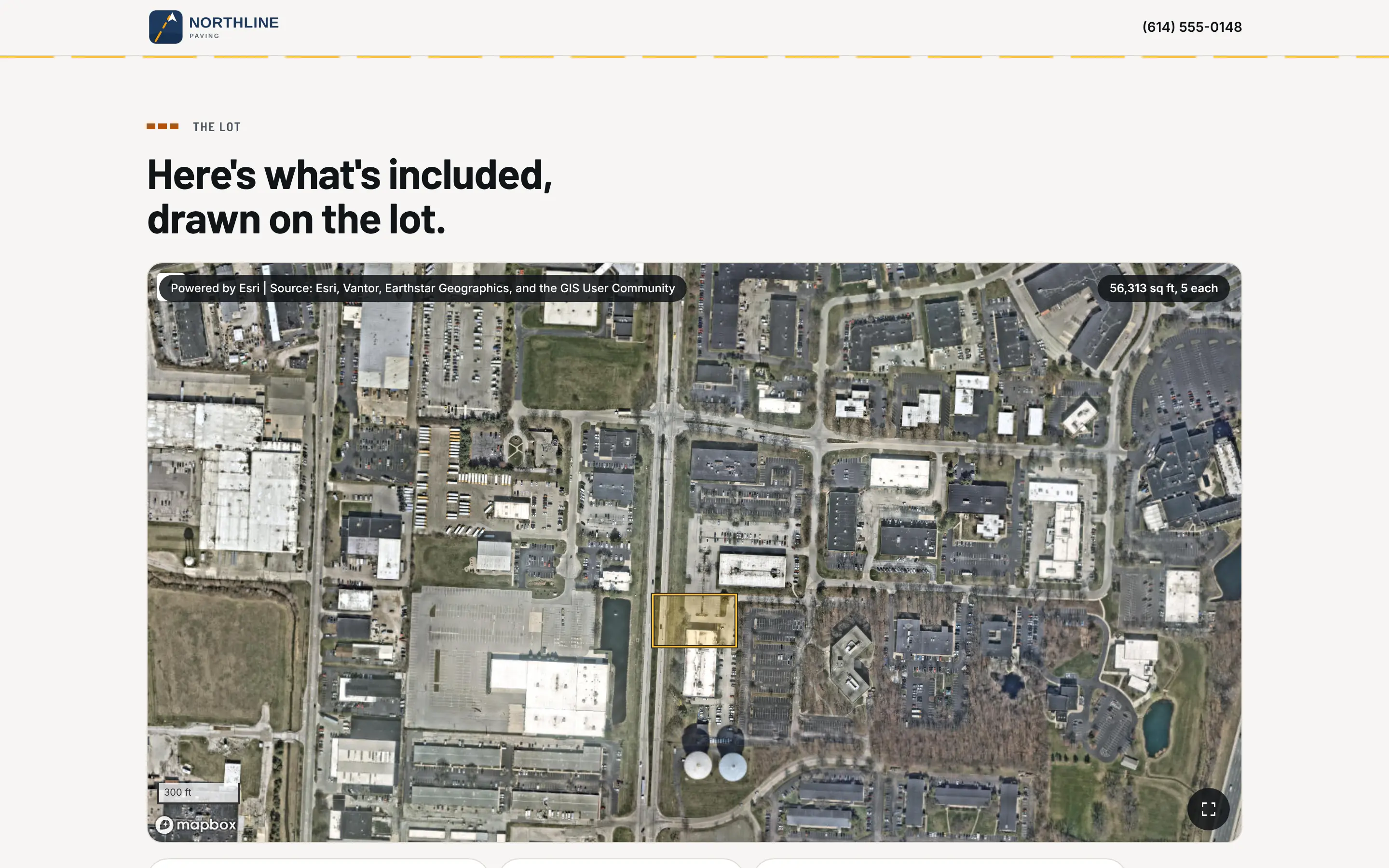
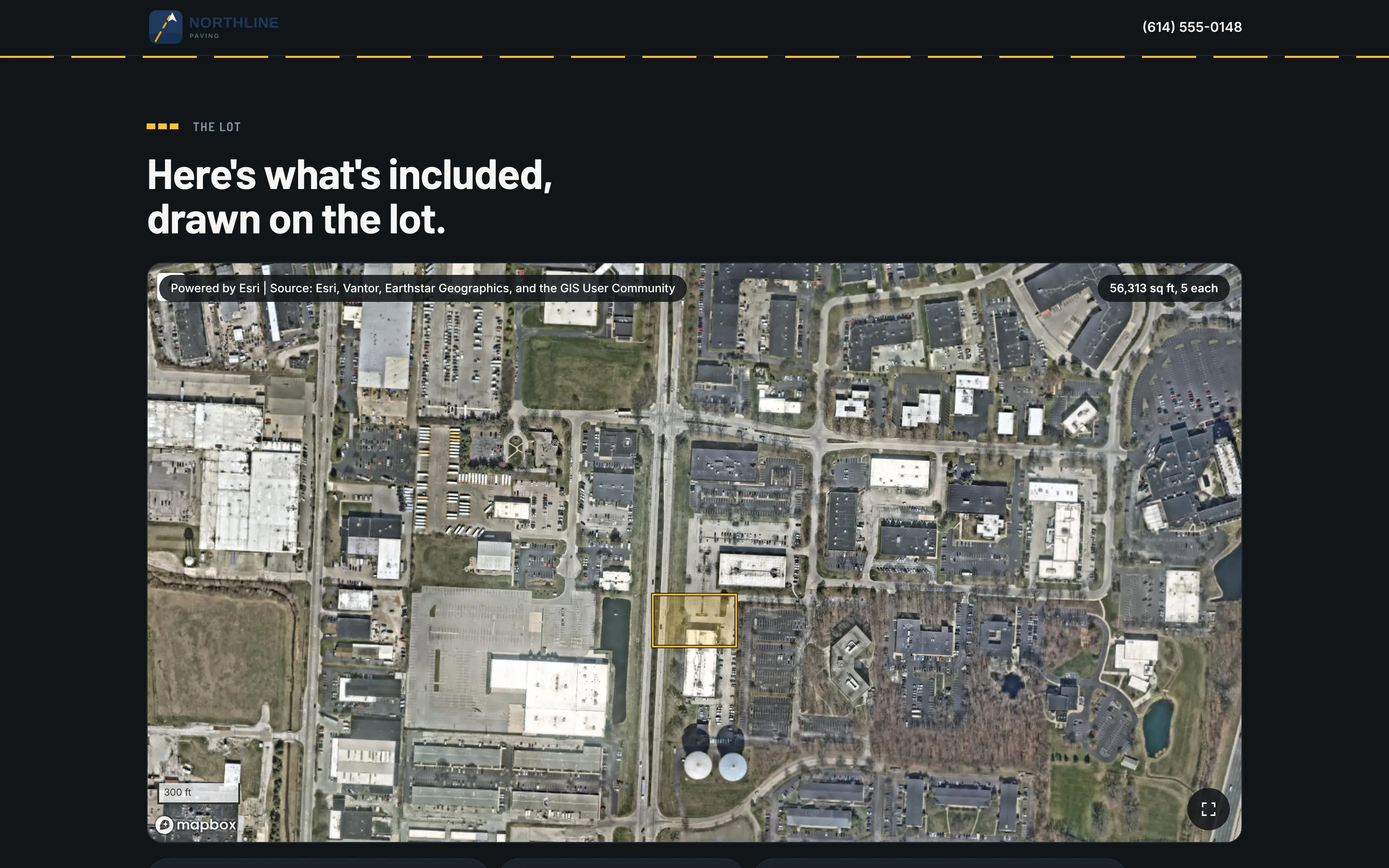
One proposal under your logo, at one contract price, even when the lot has paving, curb, sealcoat and striping on it. It holds its price for 30 days unless you set it otherwise. Three days before it runs out, the customer gets a reminder. When they sign, the job is won.