Ask most paving contractors in July whether last week's lot made money and the honest answer is "probably." The proposal was $48,000. The plant tickets are in a folder, the hours are on a sheet in the truck, the striping sub hasn't invoiced, and the trucking bill comes at the end of the month. Sometime in the winter the accountant says the company made 8 percent, and nobody can say which jobs made 20 and which lost 10.
Job costing answers that one job at a time, while the job is still running. Accounting tells you whether the company made money. Job costing tells you which work did.
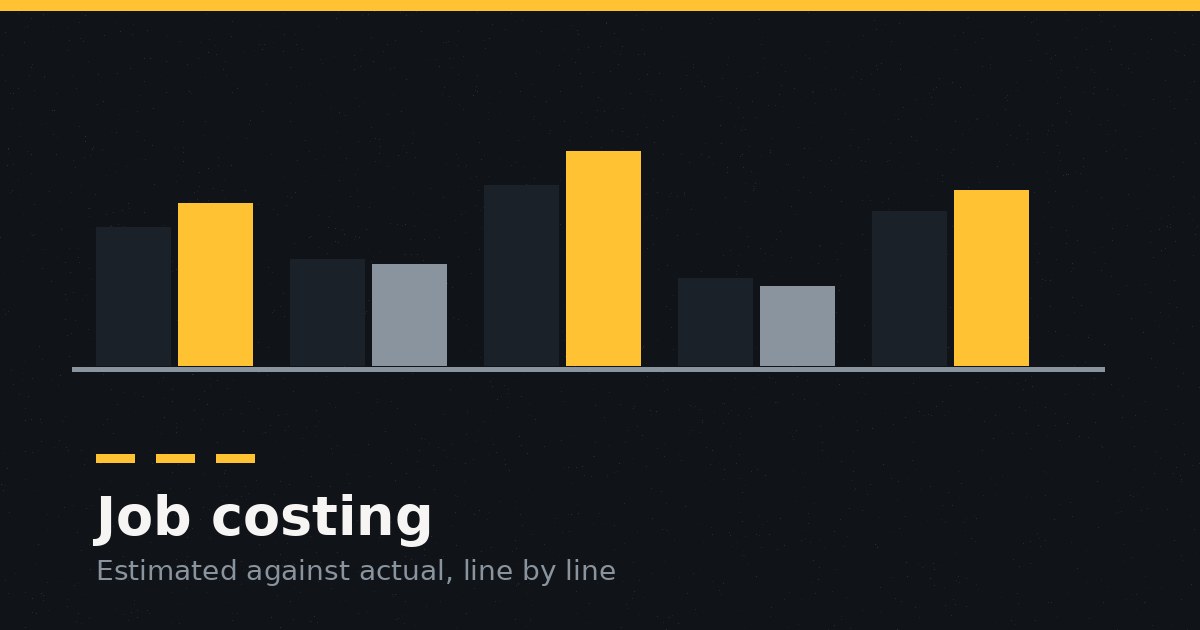
For every job you want three numbers per line: what the estimate said it would cost (the cost, not the price), what it actually cost, and the difference in dollars and percent. The difference is the one that teaches you something. "Ran $4,000 over" is a fact. "Ran $4,000 over because the mix line was $3,800 heavy" is a waste factor that needs fixing.
Here's how it goes on a real job.
When you price it
Job costing starts in the estimate, because you can only compare line by line if the estimate had lines. Tons of surface course, tons of binder, tack, trucking, crew days, the milling sub, the move in and out. If the estimate was one number called "paving," the comparison is a research project every time.
Two lines most estimates get wrong before a shovel moves.
Labor at what it really costs. Wages are only part of it. Add the employer's share of Social Security and Medicare (7.65 percent by itself), unemployment tax, workers' comp and whatever benefits you pay, then divide by wages. That's your burden. If it comes to 30 percent and you price the crew at bare wages, every labor line on every estimate is 30 percent light, all year.
Equipment at what it costs you to own and run. The paver, the rollers, the mill, the skid steer, the lowboy, by the hour. Leave this line off and the jobs all look fine, right up until the company can't afford to replace the paver.
On paving day
This is when the money gets spent and the office knows least about it. Three things should come off the lot before anyone forgets them.
The mix. On a 400-ton day that's somewhere between 17 and 25 plant tickets, depending on whether the loads are coming in tri-axles or trailers. The mix is the biggest cost on the job, and the easiest to check, because the plant's monthly statement will match the tickets if you kept them. Add them up the same day and write down tons placed against tons estimated.
The hours. Who was on the lot, and for how long. A paper sheet turned in on Friday is a guess. Hours clocked on the lot from the crew's phones are a fact, and they're on the job that night.
Everything else. The receipt from the supply house, the stone for base repair, the tack. Each one is small, and they add up. Photograph the receipt at the counter, not in March.
Midweek, while there's still time
Job costing done in February is better than nothing. It's also mostly useless for the year it describes.
Done during the job, it changes decisions. If the tickets on day two of a three-day job already add up to the whole estimate, something's off. Maybe the mat is running heavy at the screed, or the lot is rougher than the estimate assumed. You can check the depth, talk to the foreman, or write the change order for the base repair that's eating the mix, all before day three. A crew that's 20 percent over on hours at the halfway point is a conversation today, not a line in a report next quarter.
Watch the mix first. Tons ticketed against tons estimated is usually the biggest variance on a paving job, and it comes from a known list: depth creep, ruts that fill before the lift starts, hand work at the edges, and a plant unit weight that isn't the 145 you assumed.
At closeout
Before the final invoice goes out, put the estimate next to the actuals and write one sentence about what you learned. The sub invoices are in by now, and so is the trucking. If the tonnage line was 12 percent over and you allowed 7, fix the waste factor on that kind of job now, while you still remember why.
Keep overhead out of it. The shop, the office, insurance and your truck get recovered in the price, but they don't belong in one job's actual cost, because they don't change when a job goes well or badly. Put overhead in and every variance gets muddied by numbers the crew never touched. Track direct cost per job, and handle overhead as a percentage for the company.
In the winter
One job over is noise. The same line over on every job of one type is the estimate.
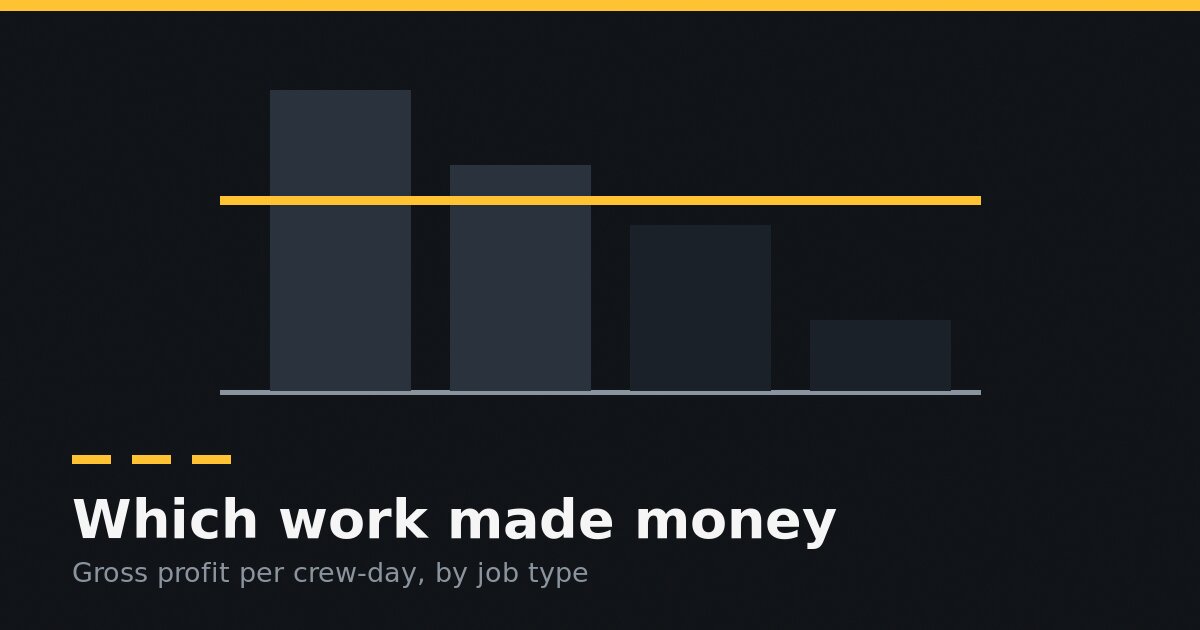
Sort the season by type: overlay, mill and fill, new construction, patching, sealcoat. Look at each line by type. What a lot of contractors find is that the year's margin is a blend of one kind of work that always makes money and one that never does. Mill-and-fill jobs that run 12 percent over on labor every time don't have a crew problem. They have a labor rate nobody has touched in three seasons.
That's the payoff. "We should price higher" turns into "the milling labor rate is 12 percent light," and only one of those is something you can fix.
Where Pavr fits
Pavr is job management software for paving, sealcoating, striping and concrete contractors. In Pavr the estimate is already built in lines, each with a cost, so there's nothing to rebuild when the job runs. Crews clock in on the job from their phones, and the foreman approves the hours. The foreman logs the material used on the daily log, receipts get photographed, and sub invoices come in against the work order. As each one is approved it posts next to what you estimated. A line goes yellow at 5 percent over the estimate and red at 10 percent, or at whatever thresholds you set.
When the job closes, it rolls up with the others by month, by customer, and by paving, concrete, sealcoat and striping. That's where "mill and fill is light on labor" shows up while there's still a season to fix it. Each job's costs export to CSV for whoever does your books. See how job costing works.
Was this useful?
It tells us what to write more of.