The plant sends the email: opening the second Monday in April, first come first served. You've got four signed lots waiting and a property manager who wants the entrance done before the tenants' Easter sale. The paver has been parked since November. Two of last year's crew haven't called back. One driver's medical card ran out in February, and nobody noticed.
None of that is hard to fix in March. All of it is expensive to find out at 6:15 a.m. on opening day, with seven people on the clock and a truck of mix on the way.
What spring startup means for a paving company
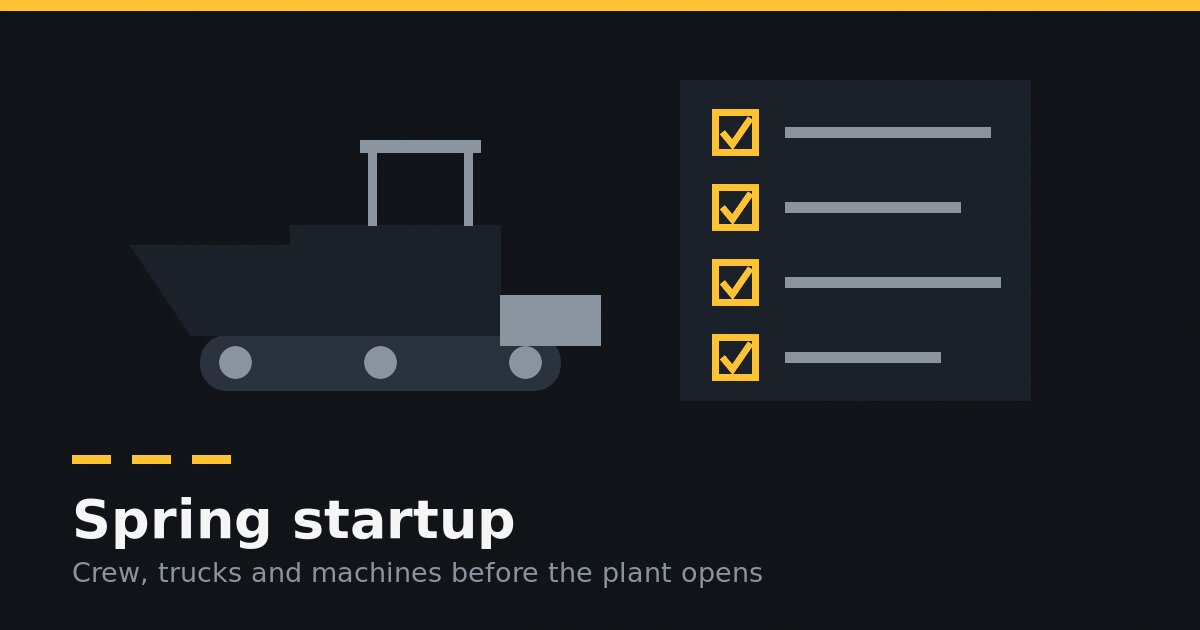
Spring startup is the work between the thaw and the first load: getting the crew back and legal to drive, getting every machine started, greased and tested, and getting material, paperwork and the first two weeks of jobs lined up before the plant opens. Start it three to four weeks before the opening date. The point is simple: the first day of paving should be a normal day, not a shakedown.
Here's the order most shops find works, because each step feeds the next.
Three to four weeks out: the crew
Machines wait. People don't. Your best raker has other offers in March, and the calls you make now decide who's on the screed in April.
Call everyone back by name. Not a group text. Tell each person the start date, the pay rate for the season and the first week's schedule as best you know it. Anyone who hesitates is telling you something, and you'd rather hear it now than on opening day.
Count the crew against the work. Say you run two paving crews of six and a sealcoat crew of three. That's 15 people. If 12 are coming back, you need three hires, and a new raker who starts the same week as the plant is learning on a customer's lot.
Check the drivers. Anyone who drives a truck that needs a CDL needs a current DOT medical card, and a card is good for up to 24 months, so some expire over the winter. Your CDL drivers also need their annual query in FMCSA's Drug and Alcohol Clearinghouse. Pull the list of who drives what and check each card's date on paper, not from memory.
Plan the first week's safety talk. New people and returning people both need it before they're near a roller or a backing truck. OSHA and safety for paving crews covers what the rules expect.
Two to three weeks out: the machines
If you did the winter list from the off-season checklist, you have a sheet per machine that says what needs a part. This is when those parts go on.
The paver. Batteries charged or replaced, fluids checked, grease on every fitting on the manual's schedule. Start it, warm it up, run the conveyors and augers, and light the screed heaters. A screed that doesn't come up to temperature on the first morning drags the mat, and nobody notices until the roller's already on it. Walk around it for hydraulic leaks after it's warm, not before.
The rollers. Put the spray nozzles back in, fill the water system and run it. Look at every nozzle's pattern. A plugged nozzle is a stripe of mix picked up on the drum. Check the vibration and the drum scrapers, and on a rubber-tire roller check the tire pressure against spec.
The trucks. Commercial trucks generally need a periodic inspection at least once a year under FMCSA's rules, and your state may add its own. Plenty of shops time it for March so it's done before the season. Brakes, lights, tires, the bed hoist, the tailgate. A tri-axle that fails an inspection at a scale house in May costs a lot more than the one that failed in your yard.
The small stuff. The plate compactor, the saw, the tack sprayer, the leaf blowers, the hand tools. Lutes with cracked handles and rakes with missing teeth get replaced now. Every one of these gets used on the first day, and every one of them is a trip to the rental yard if it doesn't start.
The sealcoat rig and the crack melter. Run water through the sealer tank, pump and hoses before sealer goes in. Fire the melter, check its heat transfer oil, and check the wand and hose. If striping is in-house, flush the striper, change the filters and try a line on cardboard.
Why a breakdown on day one costs what it does
It's worth putting a number on it, because it's the argument for spending two days in the yard.
Say the paver won't start on opening day and it takes three hours to get a mechanic there with the part. Your crew of seven is standing around at a loaded labor cost of $50 an hour each. You've got four trucks on hourly waiting to transport mix, at $110 an hour.
- Crew: 7 × 3 hours × $50 = $1,050
- Trucks: 4 × 3 hours × $110 = $1,320
- Total: $2,370, before the mechanic's bill
That's before the mix that's already loaded and cooling, and before the property manager who took the day off to meet you. Starting the paver in the yard two weeks earlier costs one person a morning.
One to two weeks out: material and paperwork
Talk to the plant. Confirm the opening date, the mixes they'll run first and the season's prices. If your proposals from February used last year's plant price, you want to know the gap before you pave them, not after. Ask when they'll run the mix your first jobs call for, because not every mix runs on opening day.
Stock what the crew needs. Tack, release agent, fuel, marking paint, cones, the first pallets of sealer and crack fill, paint and glass beads for the striper. Order enough for the first two weeks. Suppliers get busy the same week you do.
Renew what expires. Your insurance certificates go to GCs and property managers who won't let you on the lot without a current one. Send updated certificates to your regular customers before they ask. Check your business license and any city permits you pull every year.
Line up the subs. Call the milling sub and the striping sub with your first jobs and dates. Everyone's calendar fills in the same two weeks, and a mill-and-overlay job without a milling machine is a lot of people waiting.
The last week: the schedule and a dry run
Put the first two weeks on the board. Every job with its address, crew, equipment, tons and the customer's contact. Book the jobs with the easiest access and the most forgiving customers first. The first lot of the year is where the new raker learns the crew's rhythm, and that's better on a church lot than a hospital entrance.
Call the first customers. Confirm the date, remind them the cars have to be gone, and tell them how you'll let them know about weather. A lot full of cars is the other classic way to lose opening day.
Run a half day in the yard. Get the crew in the week before, paid. Start every machine, hand out the gear, walk through who does what at the paver, and do the safety talk. If you can, pave a small patch in your own yard or on a practice job. The problems you find there cost nothing but time.
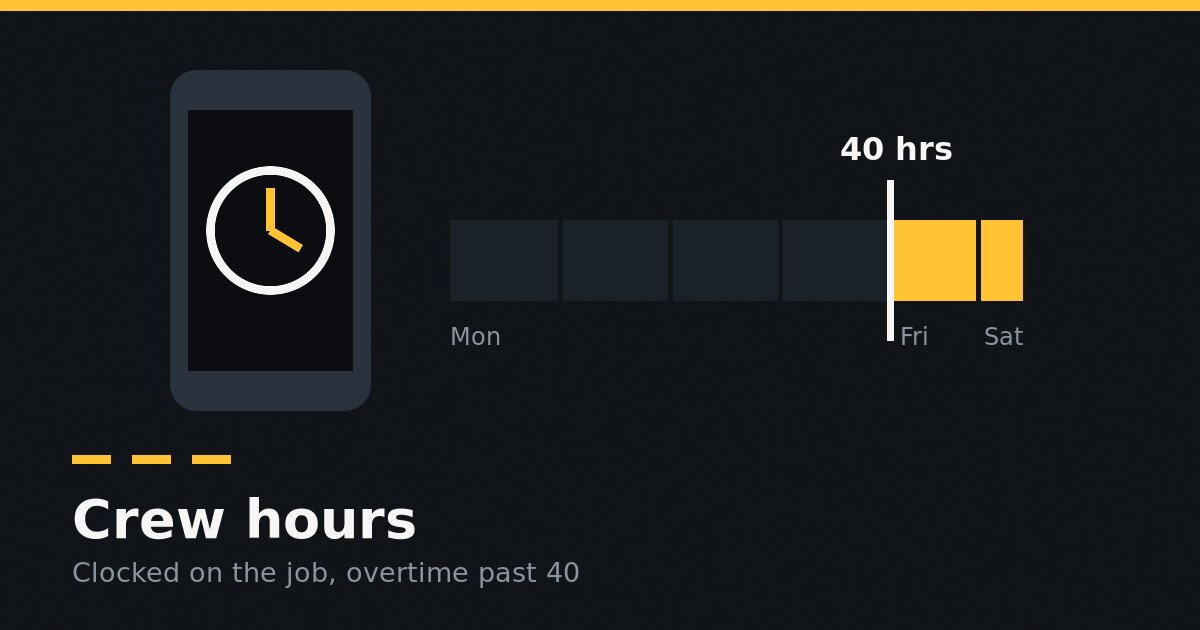
Test the phones. If your crew clocks in or keeps the daily log on their phones, have everyone open it, sign in and clock in once in the yard. A forgotten password is a two-minute fix at the yard and a twenty-minute one on the lot.
Questions contractors ask
How early should spring startup begin?
Three to four weeks before the plant opens is enough for most shops. Start with the crew calls, because people take other jobs. The machines can wait until two weeks out if the winter sheets are done.
What should be tested before the first paving day?
Every machine that goes to the lot, run warm: the paver with its screed heaters lit, the rollers with water through every nozzle, and the trucks through their inspection. Test the small tools too, because they're the ones nobody checks.
Do I need to pay the crew for a startup day in the yard?
Yes. Time spent working, training or getting equipment ready is work time, and it's paid. It's also the cheapest day of the season to find out what's broken.
What paperwork expires over the winter?
Driver medical cards, truck inspections, insurance certificates you've sent to customers, and some city or state licenses. Keep one list with every expiration date so March doesn't depend on memory.
Where Pavr fits
Pavr is job management software for paving, sealcoating, striping and concrete contractors. When the first jobs go on the schedule, a crew or a roller booked in two places shows up before anyone's dispatched, and dispatch buzzes the foreman's phone. The crew clocks in on the job from their phones, in English or Spanish, and the foreman's daily log goes up from the lot. See how a job runs from signature to closeout.
Was this useful?
It tells us what to write more of.